
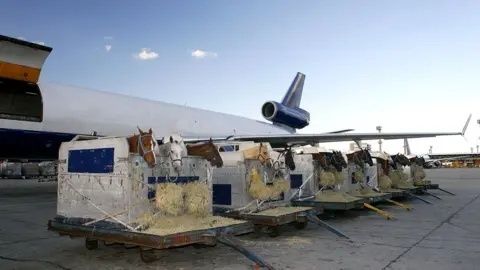
The Masterclass of Intercontinental Equine Transit
Flying an elite sport horse across hemispheres is not simply a matter of booking cargo space and arranging a road transfer. It is a carefully staged operation in which veterinary readiness, documentary precision, aircraft capability and expert handling must remain aligned from the home stable to the competition venue. A horse travelling to an Olympic qualifier, a major jumping fixture or a championship meeting represents considerable sporting and financial value, yet the central priority remains welfare. The athlete must arrive healthy, hydrated, settled and capable of resuming a controlled performance programme.
Modern equine charter and specialist freight operations differ markedly from ordinary cargo logistics. Horses travel in purpose-built air stalls, usually on the main deck of a climate-controlled aircraft, with trained flying grooms responsible for their care. The movement is planned around respiratory comfort, balance, hydration, disease prevention and predictable customs clearance. For managers coordinating a global season, the challenge is therefore physiological as well as regulatory and mechanical: a successful flight is one that protects the horse”s health while preserving the rhythm of elite preparation.
Pre-Flight Biosecurity and Strict Quarantine Protocols
Biosecurity begins weeks before a horse reaches the airport. The objective is to prevent an apparently healthy animal from carrying infection into a transport group, an importing country or a competition stable area. Each horse should have a documented health history, reliable identification and a clearly mapped itinerary covering its residence, pre-export isolation, transit points and destination. Requirements differ according to origin, transit history and destination. In the United States, for example, USDA APHIS import guidance explains that live equine shipments may require an import permit, an official veterinary health certificate, port inspection, testing and quarantine, with quarantine periods varying according to risk and circumstances.
Routine surveillance at the home yard is equally important. Temperature monitoring can identify an early change before respiratory signs become obvious, while separation of newly arrived horses reduces the possibility of introducing infection to resident athletes. British Equestrian guidance recommends that new horses are isolated, ideally for three weeks, subject to veterinary advice, and stresses that horses should be vaccinated against equine influenza with boosters maintained at least every 12 months. These measures matter particularly before group air transport, when multiple horses from different yards may share loading facilities, vehicles and temporary holding areas.
The FEI requires horses competing at FEI events to be vaccinated against equine influenza, with records entered in the passport and FEI HorseApp. Vaccinations must be administered and recorded correctly by a licensed veterinarian, and horses cannot compete or enter an FEI Stables Area within seven days of vaccination. Tetanus vaccination is strongly recommended, while additional protection may be advised according to local disease risks. A practical pre-clearance sequence is as follows:
- Confirm the horse”s identity, passport, ownership and travel classification against the destination requirements.
- Review vaccination dates, influenza coverage, booster intervals and any waiting period before competition.
- Complete required laboratory testing, official health certification and export endorsements within the permitted validity windows.
- Check the horse”s temperature, respiratory signs, appetite, hydration and manure output during the final monitoring period.
- Separate the horse from unnecessary contact, disinfect equipment and confirm that the transport vehicle and loading area are prepared.
- Conduct a final veterinary examination before airfield arrival, with contingency arrangements in place if the horse shows fever, nasal discharge, coughing or digestive disturbance.
Modernizing Border Frameworks for International Competition
Border administration has become one of the most demanding elements of international equestrian planning. Movements between Great Britain and the European Union now require more advance preparation than they did before Brexit, including additional veterinary documentation, traceability and health certification. The FEI”s international movement framework places responsibility on owners, Persons Responsible, national federations, veterinarians and organisers to verify requirements early. A missed endorsement or an incorrectly completed document can delay a horse even when the animal itself is clinically fit to travel.
The United States also operates a detailed import system. APHIS requirements can include permits requested in advance, original health certificates in English or accompanied by an English translation, scheduled port inspections and quarantine. The precise route matters because transit through another country can alter the applicable conditions. Traditional import procedures are designed to protect the domestic equine population, but they may apply the same administrative architecture to a temporary championship horse as to a permanent import, despite the high-health controls already surrounding many elite athletes.
That tension has prompted legislative attention. In 2026, Representatives Paul Tonko and Kat Cammack introduced H.R. 10611, the Temporary International Movement of Equines Act, or TIME Act. The proposed framework would direct the USDA to create a science-based system aligned with the World Organisation for Animal Health High Health, High Performance model, using risk-based identification, traceability and biosecurity while supporting expedited entry and modified quarantine for qualifying horses. The proposal is described in the Tonko, Cammack bipartisan TIME Act announcement and in the Congressional release on modernizing competition horse entry.
| Factor | Traditional import pathway | Expedited sports animal corridor |
|---|---|---|
| Primary purpose | Permanent or general importation | Temporary competition or racing movement |
| Risk assessment | Often determined by country, transit history and broad animal category | Focused on verified high-health status and documented itinerary |
| Controls | Permits, testing, inspection and quarantine as prescribed | Traceability, pre-arrival records, defined biosecurity and modified procedures |
| Operational effect | Potentially longer clearance and holding periods | More predictable access when eligibility is established |
Stall Engineering and In-Flight Environmental Controls
Equine aircraft transport begins with the stall rather than the seat. A jet stall is a padded, ventilated container secured inside the aircraft, designed to allow the horse to stand naturally while limiting dangerous lateral movement. Configurations vary. Some horses travel in individual loose boxes, offering greater separation and room for a horse that requires more personal space. Others stand side by side in shared configurations with partitions, an arrangement that can use cargo volume efficiently while providing social familiarity and mutual stability.
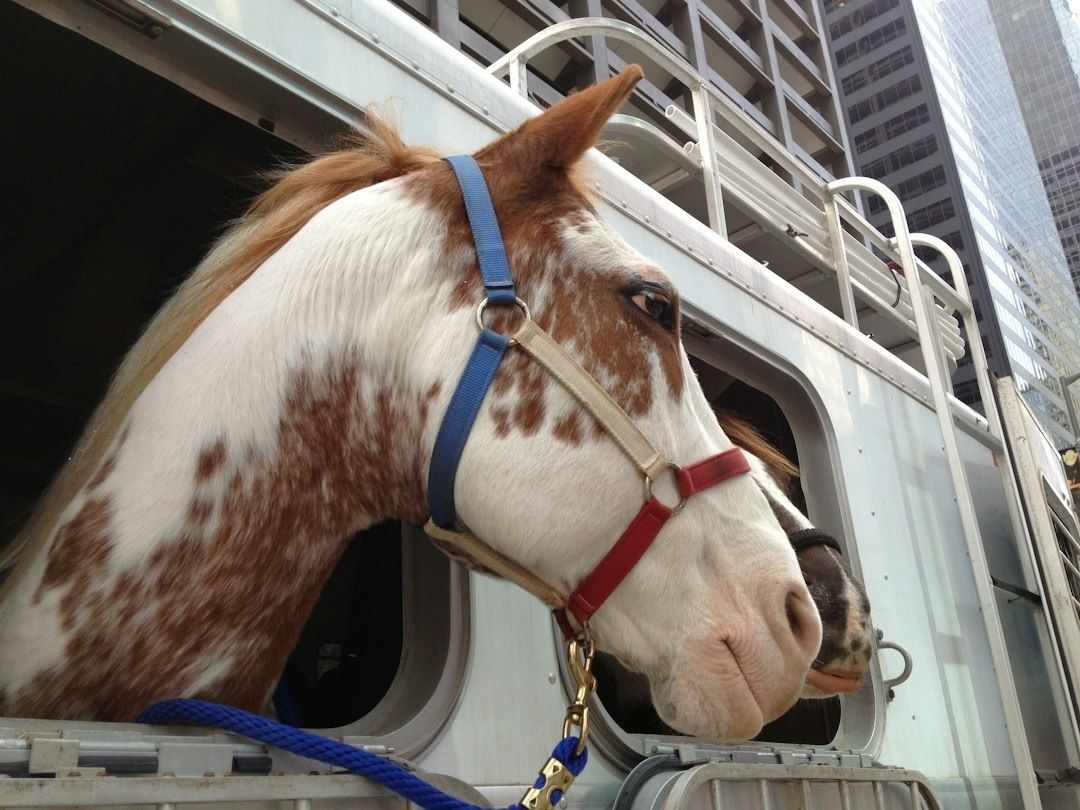
Loading equipment must be engineered for calm, controlled movement. Stalls are transferred by lift, and ramps require a firm, non-slip surface with a gradual alignment that avoids sudden changes in footing. Inside the freight hold, aircraft operators manage temperature, ventilation and pressure as part of the flight plan. A horse does not experience cabin conditions in exactly the same way as a person in a passenger cabin, so stable airflow and respiratory comfort are particularly important. Dusty bedding, poor ventilation or excessive heat can increase respiratory stress during a prolonged period of standing.
Specialist shipments commonly use the main deck of a climate-controlled freighter, where grooms can work around the stalls and observe the horses. The arrangement must also account for equipment, forage and water, as well as safe access during loading, flight and unloading. Key engineering and environmental priorities include:
- Secure stall anchoring that prevents shifting during taxiing, take-off, turbulence and landing.
- Padded partitions that protect the horse without restricting normal balance or breathing.
- Non-slip flooring and a ramp design that reduces hesitation and falls during transfers.
- Consistent temperature and airflow, with conditions monitored throughout the journey.
- Enough working access for trained attendants to provide water, forage and veterinary assistance.
- Careful management of bedding and airborne particles to support respiratory comfort.
The Specialized Flying Groom and In-Air Physiological Management
The flying groom is the operational link between the veterinary plan and the horse”s lived experience in the aircraft. Duties begin on the tarmac, where the groom checks protective equipment, stall allocation, partitions, forage and water before loading. Once airborne, the groom observes posture, demeanour, sweating, appetite, drinking, manure production and signs of anxiety. The work requires practical horsemanship as well as familiarity with cargo procedures, because access to the horses is governed by the aircraft crew and the flight environment.
Hydration is managed steadily rather than through one large intervention. Horses may be offered water at regular intervals, with individual preferences and normal drinking habits taken into account. Hay is generally provided in controlled quantities so that the horse has access to forage without creating unnecessary respiratory dust or digestive overload. The aim is to preserve the horse”s normal digestive rhythm while avoiding abrupt changes in feed. Sedation is generally avoided because a travelling horse needs its natural balance and awareness to stand safely during movement and turbulence. Any medication must be prescribed and planned by the attending veterinarian.
In-flight observation is focused on early intervention. A horse that becomes unusually quiet, repeatedly paws, looks at its flank, stops passing manure, coughs, develops nasal discharge or shows laboured breathing requires immediate assessment. The groom records changes and contacts the supervising veterinarian or flight team according to the established protocol. Practical priorities include:
- Checking water intake and offering familiar forage in measured amounts.
- Observing breathing rate, respiratory effort, posture, sweating and responsiveness.
- Watching for colic indicators such as pawing, rolling attempts, flank watching or reduced manure output.
- Maintaining calm, quiet handling and avoiding unnecessary disturbance in the stall.
- Recording interventions and changes so the receiving veterinary team has an accurate handover.
- Protecting the horse from abrupt temperature changes during loading, unloading and ground transfers.
Arrival Logistics and Acclimatization Before the Grand Prix
Landing is not the end of the operation. The aircraft must be unloaded in a sequence that protects both horses and documentation. Port authorities, government veterinarians, customs officials, the shipper and the receiving team may all have separate responsibilities. Health certificates, permits, inspection records and transit documentation must be available in the correct form. Equipment and luggage can clear separately from the animals, so the venue team should not assume that saddles, feed or stable supplies will be immediately available after ramp arrival.
After inspection and release, the preferred movement is direct and quiet transport to the approved destination stable, with unnecessary intermediate handling avoided. A post-flight veterinary assessment should consider hydration, respiratory status, appetite, manure output, limb filling, skin condition and general attitude. Although individual recovery varies, many horses are given approximately 24 to 72 hours before returning to structured training. That period allows the team to re-establish feeding and drinking patterns, observe delayed respiratory or digestive signs, and adapt to local climate and time zone before asking for meaningful work.
For managers, acclimatization should be built into the competition calendar rather than treated as spare time. The schedule must allow for customs delays, weather disruption, equipment separation and a possible veterinary hold. The growing policy discussion reflects the same need for predictability. Industry and sporting bodies supporting the TIME Act argue that a managed, high-health pathway can protect domestic biosecurity while making temporary international competition more workable. The TIME Act initiative has attracted support from organisations including the American Horse Council, the U.S. Equestrian Federation, the American Association of Equine Practitioners, The Jockey Club and Breeders” Cup, illustrating the breadth of interest in consistent global travel standards.
Raising the Standard for Global Equine Sport Travel
Intercontinental equine transport succeeds when no single element is treated as secondary. Veterinary oversight establishes whether the horse is fit to move and whether its health status satisfies the destination. Biosecurity prevents a local illness from becoming an international event problem. Aircraft engineering provides stable, ventilated and secure surroundings, while the flying groom translates the welfare plan into continuous observation and careful action. Border systems then determine whether that preparation results in a smooth arrival or an avoidable delay.
The future of championship travel will depend on better harmonisation, stronger digital traceability, risk-based regulation and continued investment in high-welfare aircraft operations. Sustainability will also become increasingly important, particularly as circuits assess charter utilisation, route planning and the environmental cost of moving entire teams across continents. For managers and federations, the strategic lesson is clear: begin documentation and veterinary planning early, use specialists who understand both sport and regulation, protect a genuine recovery window, and treat the horse”s arrival condition as the ultimate measure of logistical success. When operational mastery, medical vigilance and engineering discipline converge, the journey becomes part of performance preparation rather than an obstacle to it.