
The Tripartite Dynamic of High Performance Vaulting
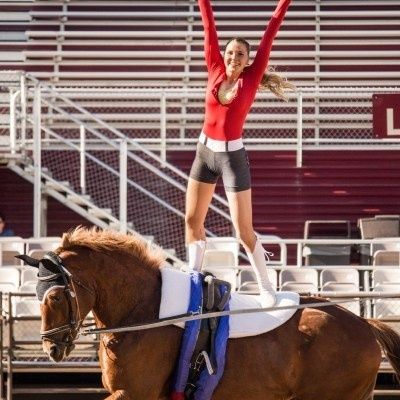
Equestrian vaulting is sometimes introduced as acrobatics performed on horseback, but that description misses the discipline”s central achievement. At international level, vaulting is a precise three-way athletic conversation between the vaulter, the horse, and the lunger. Every hand placement, turn, landing, and change of body position depends on the horse maintaining a dependable canter while the lunger preserves the conditions in which the athlete can perform safely and expressively.
The partnership is concentrated inside the competition circle, generally a 15-metre circle, where small variations in tempo or balance quickly become visible. The horse must remain rhythmic and relaxed, the lunger must regulate the circle with tact and anticipation, and the vaulter must adapt to the movement beneath the body rather than fight it. The FEI Vaulting Rules place horse welfare at the centre of competition, a principle that also explains why refined rhythm is more than an aesthetic preference. It is the foundation of safe, repeatable, championship-level execution.
The Mechanical Foundation of a Championship Canter
A vaulting canter must carry an unusual combination of requirements. It needs the regular three-beat sequence of the canter, sufficient impulsion to keep the horse engaged, and enough steadiness for an athlete to mount, stand, rotate, or land while the horse continues around the circle. The horse”s back must provide a consistent moving platform, yet the movement cannot become flat or mechanical. A quality canter has lift, elasticity, and balance, with the hindquarters contributing actively so that the forehand does not become overloaded.
Research examining international vaulting horses has helped connect what judges see with measurable locomotion. In a study of 33 international-level horses, researchers used an inertial measurement unit attached to the sternum and compared movement data with assessments from five international judges. The study found that correctly judged canters were associated with greater elevation, stronger propulsion, improved regularity across the three beats, a slight inward inclination on the circle, and better balance toward the hindlimbs. The findings, published in the study on gait parameters and judging, suggest that the visual language of a good canter has a clear biomechanical basis.
Stride consistency matters because the vaulter times movement against a repeating pattern. If the horse lengthens unexpectedly, loses propulsion, falls onto the forehand, or changes the quality of the beat, the athlete”s planned take-off point may disappear. Judges also notice whether the horse remains connected, straight enough for the circle, and relaxed under the load. The following comparison reflects the type of qualities addressed in the official FEI evaluation guidance, while recognizing that scoring is holistic and depends on the complete performance.
| Optimal canter trait | What it supports | Typical fault indicator |
|---|---|---|
| Regular three-beat rhythm | Reliable timing for mounts, transitions, and landings | Irregular beats, rushing, or breaking gait |
| Active hind-leg propulsion | Elevation, suspension, and a more stable back | Flat movement or excessive weight on the forehand |
| Balanced inward bend | Controlled travel around the circle | Falling inward, drifting outward, or resisting the circle |
| Elastic, relaxed topline | A comfortable platform and harmonious contact | Tension, hollowing, or a rigid back |
| Consistent stride length | Predictable preparation for athletic elements | Unexpected shortening, lengthening, or loss of impulsion |
The Lunger as Conductor and Strategic Anchor
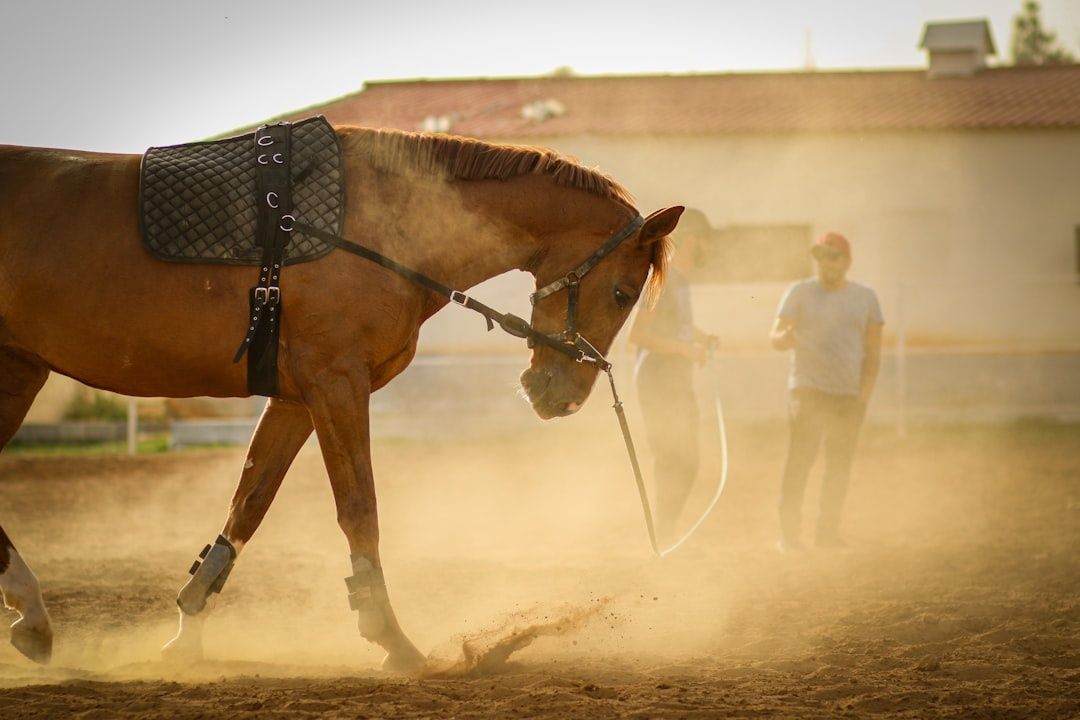
The lunger is not a passive figure standing at the centre of the circle. This specialist manages the horse”s tempo, line, balance, and attention while also reading the vaulter”s position. Communication travels through several channels at once: the lunge line provides information about direction and connection, the voice can regulate tempo and relaxation, and the whip supports the horse”s impulsion without becoming a blunt instrument. The finest lunging is almost invisible because the horse appears to maintain the rhythm independently.
Working on a 15-metre circle intensifies every technical demand. The lunger must preserve a sufficiently round track while preventing the horse from leaning inward or drifting away. The horse needs to remain active behind, neither accelerating in response to the athlete”s movement nor losing energy when the athlete becomes static. The 2024 FEI rules and accompanying guidance address lunging, canter quality, horse preparation, entry, salutation, and the wider obligation to protect the horse throughout training, transport, competition, and recovery.
When a vaulter shifts weight, the lunger makes small corrections rather than dramatic interventions. A useful sequence is:
- Read the horse”s response. Identify whether the change has produced a loss of tempo, inward balance, outward drift, tension, or a shortened stride.
- Stabilize the rhythm first. Use a quiet voice and measured line contact before asking for more energy. Speed rarely solves a balance problem.
- Adjust the circle discreetly. A subtle change in body position, line influence, or whip placement can help the horse maintain the intended track without sudden movement.
- Restore impulsion. If the horse has become cautious under a landing or static position, a controlled forward aid can re-establish engagement while preserving relaxation.
- Allow the horse to settle. Once the gait is regular, the lunger reduces unnecessary signals so the partnership can return to an efficient, self-carried pattern.
Compulsory Rigor and the Mechanics of Vaulter Harmony
Compulsory exercises reveal whether a vaulter can organize the body around the horse”s movement. In the Basic Seat, the athlete must absorb the horse”s vertical motion through a stable trunk and mobile hips rather than stiffening the lower back. Hip dissociation is crucial: the pelvis follows the canter while the torso remains sufficiently controlled for the position to look deliberate. During the Mill, the vaulter rotates through several orientations without losing contact, alignment, or timing. The movement is not simply a sequence of poses; it is a continuous negotiation with the horse”s back.
International scoring rewards more than completion. Judges consider body control, balance, posture, movement quality, precision, security, and harmony with the horse. These qualities also influence the artistic result. According to guidance on artistic scoring, artistic evaluation includes structure and choreography, with attention to variety, transitions, musical interpretation, composition, expression, and the balanced use of the horse”s space. A technically ambitious routine can therefore lose value if its movements disrupt the horse”s comfort or abandon the underlying rhythm.
Off-horse preparation is valuable because it permits correction without placing additional demands on a working equine partner. Mechanical simulators such as the Racewood Vaulting Simulator are designed to reproduce key aspects of vaulting practice, including movement and sideways displacement when a vaulter becomes unbalanced. Coaches can address hand position, shoulder alignment, hip timing, and recovery patterns while the athlete is moving. This does not replace training on a real horse, but it can build muscle memory, increase training consistency, and reduce the number of corrective repetitions required from the horse.
- Develop trunk control while the simulator reproduces a repeatable movement pattern.
- Practice mounts, transitions, and dismount preparation without fatigue accumulating in the equine partner.
- Test recovery strategies when the body is displaced sideways or when a landing is imperfect.
- Give coaches a clearer opportunity to observe and correct technique in real time.
Inside International Arenas from Aachen to Caen
At a premier showground, the arena itself becomes part of the technical examination. Music, public address systems, applause, lighting, unfamiliar stable blocks, transport fatigue, and the density of surrounding activity can all affect equine focus. A horse that is composed at home may require a carefully graduated warm-up before entering a major arena. The lunger”s calm authority is especially important in this setting, as the horse must distinguish meaningful instructions from the general noise of an international event.
Championship preparation is therefore tactical as well as physical. Teams rehearse the complete sequence, including entry, salute, music cues, spacing between athletes, and the timing of transitions. The 2026 FEI World Championships will return to Aachen from 11 to 23 August, with competitions distributed across several venues in the Allianz Park and Soers area. For spectators, the event promises the atmosphere of a major equestrian gathering; for competitors, it represents an environment in which preparation must be exact down to the minute.
- Entry and salute: Confirm the route, order, tempo, and visual focus before the horse enters the circle.
- Warm-up pacing: Build the canter progressively, allowing the horse to settle before demanding full vaulting intensity.
- Music coordination: Check sound cues, timing, and contingency plans for technical interruption.
- Squad spacing: Rehearse where each vaulter waits, mounts, lands, and exits so that transitions remain calm.
- Horse welfare: Monitor hydration, recovery, footing, tack, rest, and signs of fatigue throughout the day.
Elevate Your Understanding of Circle Harmony
The most compelling vaulting performances are created by a partnership that remains visible in every detail. The vaulter supplies strength, mobility, courage, and musical intelligence. The horse supplies rhythm, suspension, and trust. The lunger protects the conditions that allow both to succeed, shaping the circle through precise interventions that often go unnoticed by an untrained eye. Together, they transform a moving animal and a demanding athletic routine into one coherent performance.
As judging develops, objective understanding of gait quality is likely to sit alongside continued attention to harmony, welfare, and artistic clarity. Spectators at future events in Aachen, Caen, and other international venues can watch for the subtleties: the moment a lunger restores tempo with a quiet cue, the way a horse remains balanced beneath a changing load, and the vaulter”s ability to move with rather than against the canter. That is where the true artistry of vaulting resides, in the disciplined conversation taking place inside the circle.